Thai Floral Garlands
Threads of Fragrance, Blessings & Tradition
In the middle of Bangkok’s nonstop motion, I sat quietly at a worktable surrounded by jasmine blossoms, folded banana leaves, and the soft scent of fresh flowers. At Mailbarn Floral Shop, I took a traditional Thai floral garland class booked through GetYourGuide and learned that these delicate arrangements are far more than decoration. In Thailand, floral garlands carry meaning, respect, spirituality, and centuries of tradition woven into every tiny bloom.
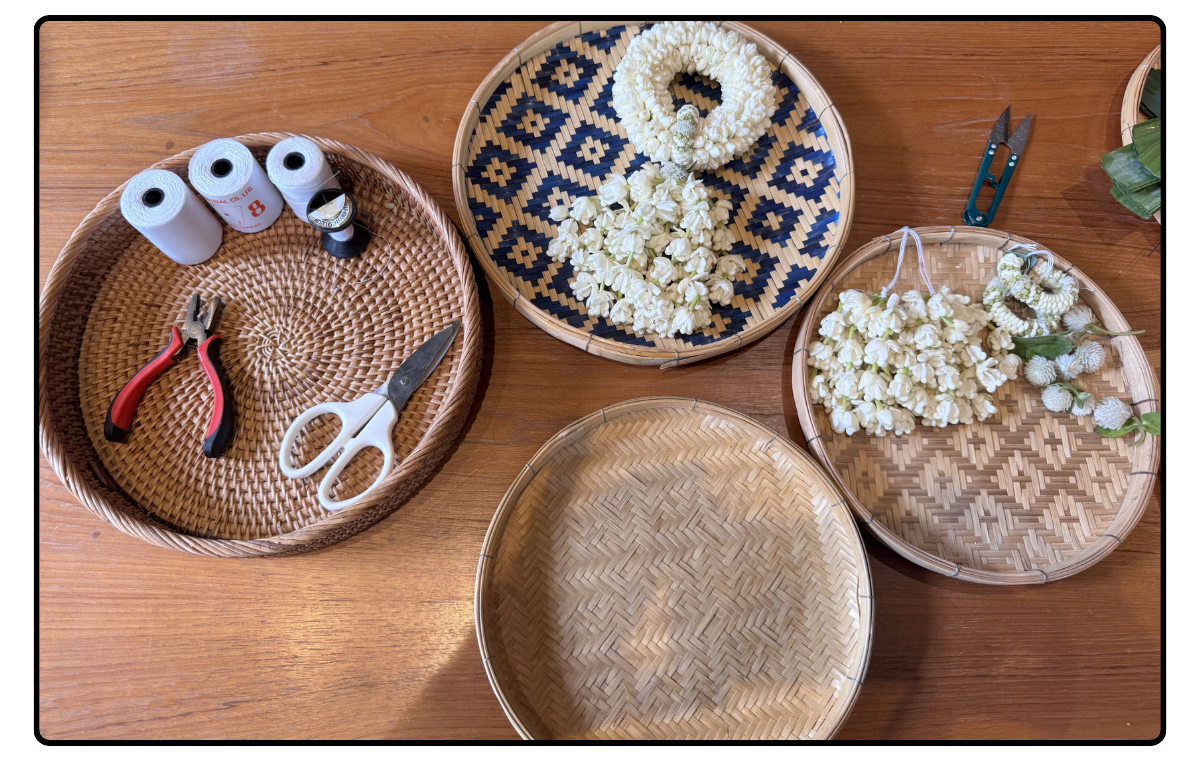
Known in Thai as “Phuang Malai,” these floral garlands have been part of Thai culture for generations. Their origins are influenced by ancient Indian floral traditions brought through Buddhism and trade routes centuries ago. Over time, Thailand transformed the craft into something distinctly its own, developing intricate weaving techniques and symbolic patterns unique to Thai culture.
Today, garlands are found everywhere in Thailand. They hang from rearview mirrors in taxis and family cars, rest on household spirit houses, adorn hotel entrances, and are offered at temples. They are given as gestures of gratitude, respect, blessing, remembrance, and welcome. A child may offer one to a parent or teacher. A business owner may hang one outside a newly opened shop for good fortune. Travelers arriving at luxury hotels are sometimes greeted with them around their necks, a fragrant symbol of hospitality.
The most traditional flower used is jasmine. Tiny white jasmine buds are prized for their sweet fragrance and association with purity, kindness, and motherhood. The scent is unmistakable in Thailand’s flower markets, especially in the early morning hours when vendors string blossoms by hand before the heat of the day arrives.
Other flowers are commonly added depending on the design and purpose:
• Roses symbolize love and respect
• Marigolds represent prosperity and good luck
• Orchids add elegance and color
• Crown flowers are often used in ceremonial garlands because of their durability
• Champaca flowers contribute rich perfume and are associated with spirituality
Banana leaves are also frequently incorporated as a base or decorative backing because they remain flexible and hold moisture well in Thailand’s tropical climate.
The style of the garland itself often carries meaning. Circular garlands symbolize continuity and respect. Long hanging tassels create movement and elegance, especially in ceremonial pieces. Some designs are made specifically for temples and shrines, while others are intended for weddings, birthdays, Mother’s Day, or offerings to monks and Buddha statues.
What surprised me most during the class was how much patience the process requires. Every flower is pierced individually with a needle and threaded in carefully repeated patterns. One misplaced blossom changes the symmetry. The instructor made it look effortless, of course. My version involved concentration, dropped petals, and a few moments where my garland looked slightly confused about its life direction.
But slowly, flower by flower, it began to come together.
There’s something deeply calming about working with fresh flowers by hand. The world slows down. The scent fills the air. Conversation softens. In a city as energetic as Bangkok, the class felt almost meditative.
And perhaps that is part of why floral garlands remain so loved in Thailand today. In a fast-moving modern world, they still represent care made visible. Not bought quickly from a shelf, but created patiently by hand, threaded blossom by blossom into something meaningful.
Mine may not rival the master florists of Bangkok just yet, but for a few hours, I became part of a tradition that has perfumed Thai culture for centuries.
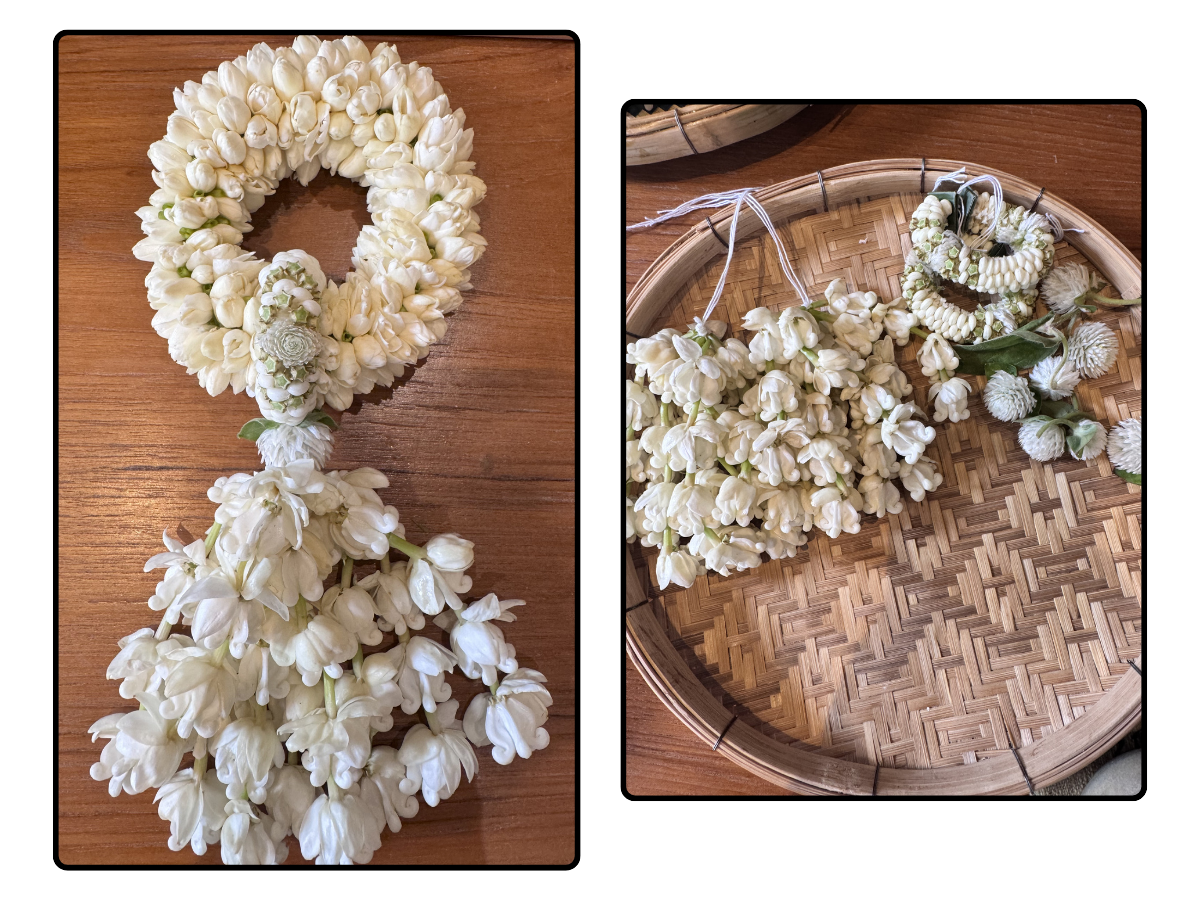
Malibarn Flowershop & Herbarium, Bangkok, Thailand